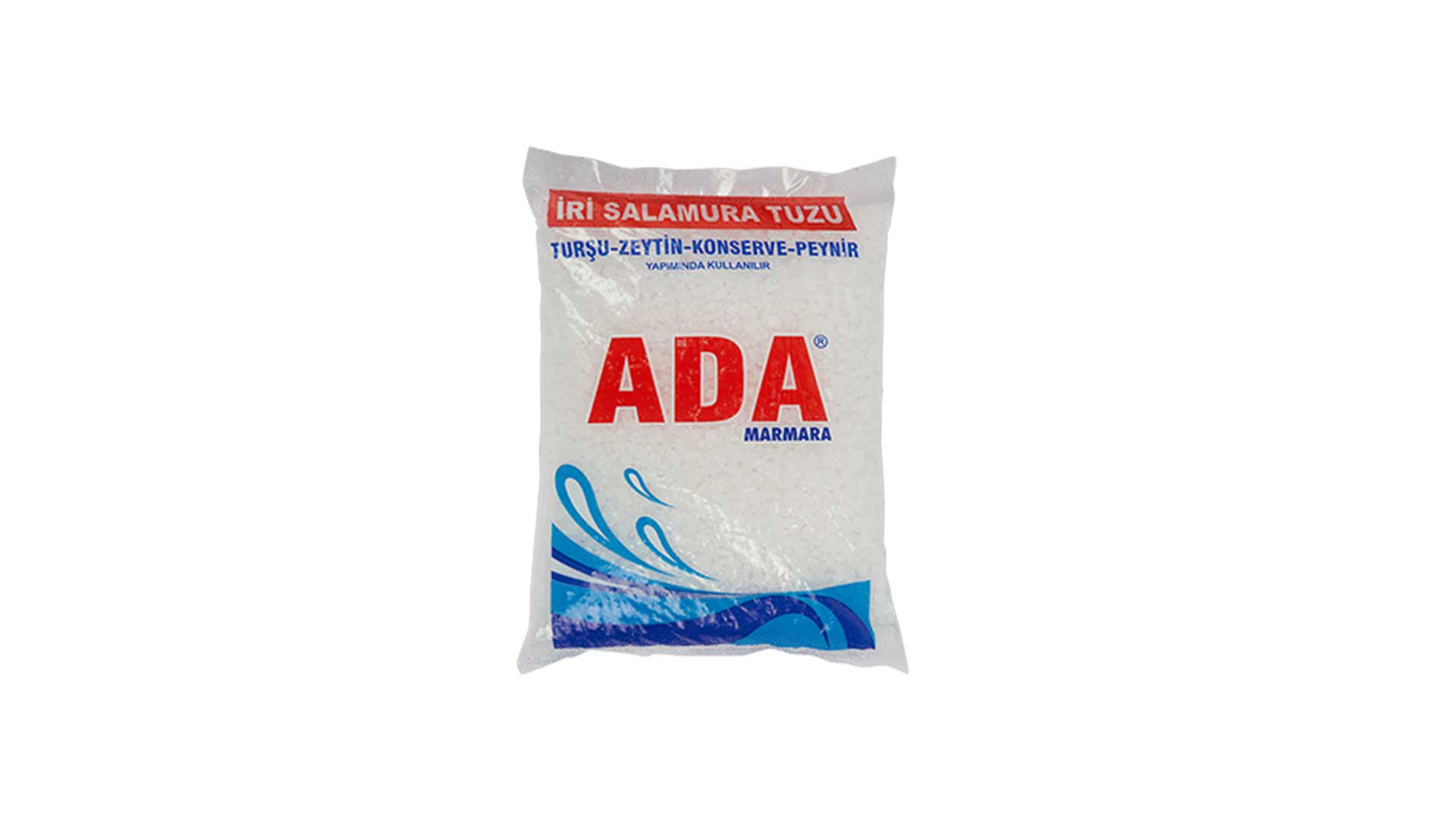
Brining applications play a critical role in the food industry by improving product durability, preserving flavor balance, and ensuring controlled fermentation. Brine salt is one of the key ingredients that directly affects product quality, particularly in the production of cheese, olives, pickles, processed meat products, and various fermented foods.
For this reason, brine salt procurement should not be based solely on price. Technical factors such as purity level, dissolution performance, granule consistency, and manufacturing standards must also be carefully evaluated. Selecting the right salt improves production efficiency while helping maintain consistent product quality.
What Is Brine Salt?
Brine salt is a specially manufactured salt designed for food preservation, curing, and fermentation processes. Thanks to its controlled dissolution characteristics and high purity, it is widely preferred in professional food production.
It is commonly used in:
- Cheese production
- Olive processing plants
- Pickle manufacturing
- Meat and delicatessen products
- Fermented food production
- Food preservation processes
The quality of the salt used in brining directly influences the shelf life and flavor profile of the final product.
Why Is Brine Salt Quality So Important?
Brine solutions used in food production play a vital role in preserving products and ensuring controlled maturation. Using low-quality or unsuitable salt may cause several production issues, including:
- Unwanted sediment formation
- Cloudy brine solutions
- Irregular fermentation
- Flavor inconsistencies
- Surface defects on products
- Reduced shelf life
For these reasons, professional food manufacturers prefer brine salt that meets high quality standards.
Technical Criteria to Consider When Sourcing Brine Salt
1. High Purity
Brine salt should have a high NaCl content. High-purity salt offers several advantages:
- Produces a more stable brine solution
- Reduces sediment formation
- Preserves product appearance
- Supports the fermentation process
Impurities and unwanted minerals found in lower-quality salt may negatively affect production quality.
2. Uniform Granule Structure
Consistent particle size is important for proper dissolution performance.
A uniform granule structure provides:
- Controlled dissolution
- More stable brine concentration
- Easier process management
This is particularly beneficial in large-scale food production facilities.
3. Low Moisture Content
Salt with high moisture content may clump during storage, making handling more difficult and increasing product loss.
Low-moisture brine salt offers:
- Longer shelf life
- Easier storage
- Better flowability
4. Fast and Balanced Dissolution
Dissolution performance is critical when preparing brine solutions. High-quality brine salt dissolves quickly and evenly in water.
This provides:
- Faster production processes
- Stable brine concentration
- Better fermentation control
5. Food-Grade Manufacturing Standards
Salt used in food production should be manufactured in accordance with recognized hygiene and quality standards.
Professional manufacturing processes provide:
- Greater product safety
- Consistent product quality
- Compliance with food production standards
The Role of Salt in Fermentation
In fermented foods, salt is not only a preservative but also a key factor in controlling microbiological balance.
Controlled Microbial Development
The correct salt concentration helps:
- Support the growth of beneficial bacteria
- Suppress unwanted microorganisms
- Maintain fermentation stability
This is especially important in the production of pickles, olives, and cheese.
Preserving Flavor and Texture
Brine salt helps maintain the:
- Flavor profile
- Texture
- Appearance
- Durability
Using high-quality salt has a direct impact on the quality of the finished product.
The Importance of Brine Salt in Food Preservation
Brining has been one of the most reliable food preservation methods for many years.
The benefits of brine salt include:
- Extending shelf life
- Improving product durability
- Maintaining flavor consistency
- Supporting preservation processes
- Contributing to production standardization
For this reason, selecting the right brine salt is an essential part of professional food manufacturing.
Why Is Supply Continuity Critical?
Food production facilities require uninterrupted operations. Any disruption in salt supply can directly affect production planning and operational efficiency.
When selecting a supplier, the following factors should be considered:
- Reliable inventory management
- Fast delivery capabilities
- High production capacity
- Multiple packaging options
- Consistent product quality
A strong supply infrastructure is particularly valuable for large-scale food manufacturers.
Packaging Options for Brine Salt
Different packaging formats provide greater operational flexibility for professional users.
Common packaging options include:
- 25 kg bags
- 50 kg bags
- 1,000 kg Big Bags
- Industrial bulk delivery solutions
Choosing the appropriate packaging helps optimize storage and handling operations.
Conclusion
Quality criteria are essential when sourcing brine salt, as they directly influence production efficiency and final product quality. High purity, balanced dissolution, low moisture content, and a uniform granule structure are among the key requirements for professional brining applications.
Choosing the right brine salt supports fermentation control, protects product quality, and strengthens production continuity. Therefore, working with suppliers that maintain reliable manufacturing standards provides significant long-term benefits.
Frequently Asked Questions
Where is brine salt used?
Brine salt is widely used in the production of cheese, olives, pickles, processed meat products, and other fermented foods.
Why is purity important in brine salt?
A high purity level provides a more stable brine solution and supports a higher-quality fermentation process.
What problems can low-quality brine salt cause?
It may result in sediment formation, unstable fermentation, and reduced product quality.
Why is granule size important in brine salt?
Uniform granules provide balanced dissolution and help maintain a consistent brine concentration.
Why is supply continuity important in food production?
Reliable supply ensures uninterrupted production planning and improves operational efficiency.
Reliable Brine Salt Solutions from Marmara Tuz
Marmara Tuz provides high-quality brine salt solutions for food preservation and fermentation applications. With high-purity products, reliable manufacturing capabilities, and multiple packaging options, Marmara Tuz offers dependable supply solutions for professional food manufacturers.
Contact Marmara Tuz for detailed product information and professional brine salt supply solutions.
export@marmaratuz.com