

Introduction: The Fundamental Role of Salt in Nut Production
In the nut industry, salt (NaCl) is not merely a simple flavoring ingredient. It is a core input that directly affects coating quality, roasting performance, shelf life, and product standardization. Beyond delivering the clear salt taste expected by consumers, salt’s ability to adhere to the surface and support the production process is equally important. For this reason, salt selection and application methods are key determinants of product quality in nut manufacturing.
Why Is Salt Used in Nuts?
The most obvious purpose of salt in nut products is flavor. Consumers expect a clean and balanced salty taste. Salt enhances the natural aroma of the product without overpowering it, improving the overall eating experience. However, its function goes beyond taste.
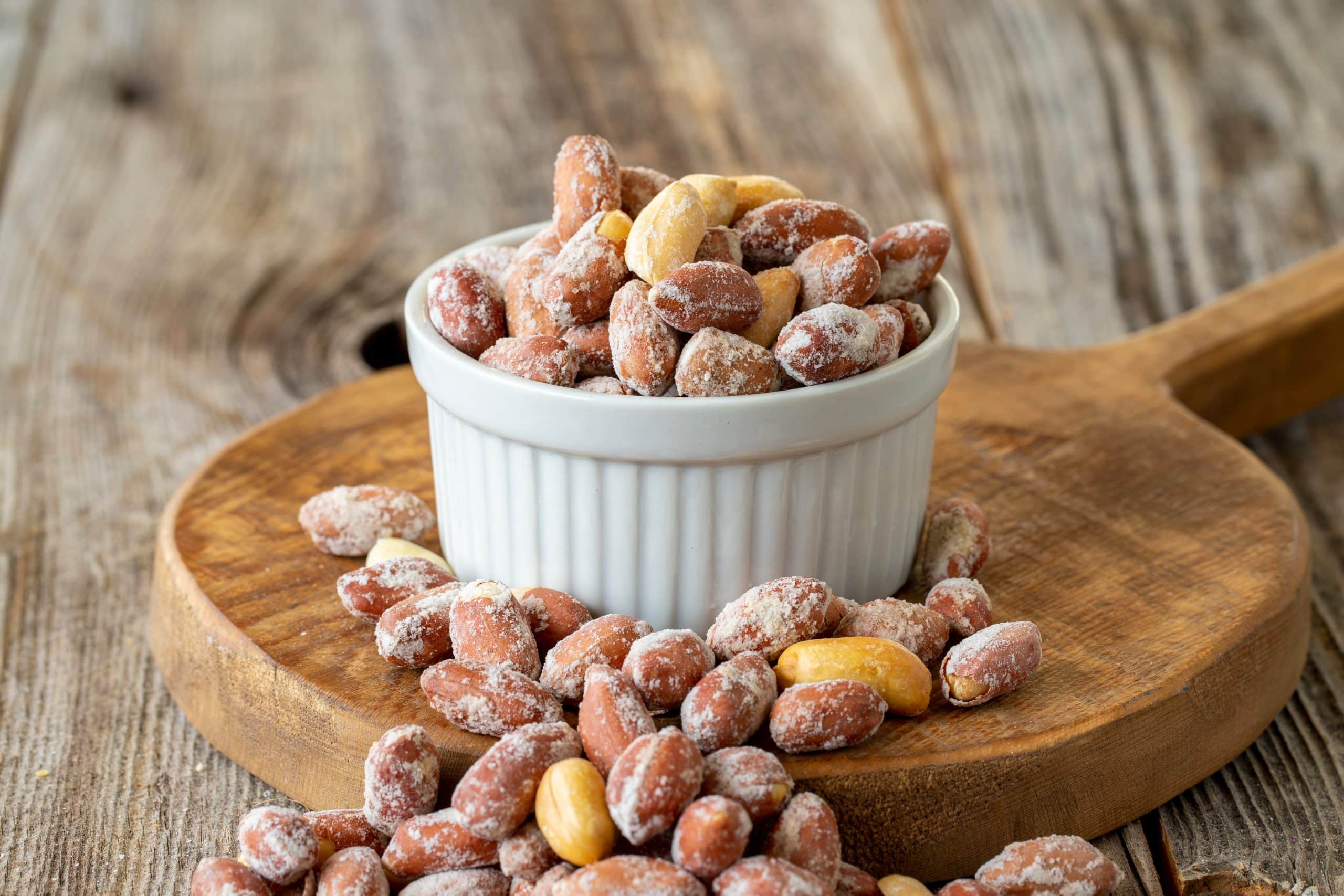
Salt plays a critical role in surface adhesion and coating. In products such as sunflower seeds and peanuts, proper salt attachment ensures a homogeneous and standardized appearance. Incorrect or insufficient salt application leads to uneven surface distribution and disrupts product consistency.
Salt also contributes to the roasting process. It stabilizes heat distribution and surface reactions, supporting roasting balance. This helps achieve the desired color and texture. Additionally, by lowering water activity, salt slows staling and contributes to extended shelf life.
Salt Application Methods in the Nut Industry
Salting techniques vary depending on product type and production line structure. Four primary systems are widely used in the industry.
Dry salting uses finely ground salt and is typically applied in rotating drums after roasting. It is common for products like sunflower seeds and roasted chickpeas. Fine salt improves surface adhesion.
Brine (wet) salting involves short exposure to saltwater solutions containing 2–6% NaCl. Used in peanuts and cashews, this method ensures more uniform salt distribution.
Spray salting systems have become standard in industrial production. Saltwater is sprayed onto the product, allowing controlled salt usage, reducing waste, and improving product consistency.
Seasoning or coating systems combine salt with spices and carriers. This method is used mainly in flavored snack-style nut products and defines the product’s characteristic taste.
Required Characteristics of Salt in Nut Production
Grain size and purity are the most critical criteria in salt selection for the nut sector. The salt should be refined vacuum salt compliant with food codex standards. It must be iodine-free to prevent bitter or metallic off-flavors. Low moisture content is essential to prevent clumping and surface staining.
Micronized or fine granular salt is preferred for coating applications because it adheres better to the surface. In premium product categories, flake salt may be used to create a distinctive surface texture. Sea salt can be used to create a “natural” perception, but strict quality control is required.
Iodized salt, moist salt, and coarse crystal salt are unsuitable for nut production. Iodized salt causes bitter or metallic flavors. Moist salt leads to clumping and staining. Coarse crystals fail to adhere properly and create uneven flavor distribution.
Salt Usage Ratios and Product Standardization
Target salt levels in nut products typically range from 0.8% to 2%. In flavored or coated products, this may rise to 1.5%–2.5%. Spray salting systems generally reduce salt consumption, providing both cost advantages and improved product standardization.
Effects of Salt Quality on Nut Products
Low-quality salt can cause multiple product defects. Moist salt may stain product surfaces. Irregular grain structures lead to uneven taste. Iodine or heavy metals create bitter and metallic flavors. Incorrect application or excessive salt can cause oil leakage and structural deterioration.
Conclusion: Salt as a Standard-Setting Factor in Nut Production
In the nut industry, salt plays a decisive role in flavor, coating performance, and shelf life. Grain size, moisture level, and iodine-free composition are the most critical selection factors. Spray and wet salting systems provide more controlled and standardized production. The right salt combined with the correct application method forms the foundation of consistent product quality.
FAQ: Common Questions About Salt in Nut Production
Is salt used only for flavor in nuts?
No. It directly affects coating quality, roasting balance, and shelf life in addition to flavor.
Which salting method offers better control?
Spray and wet salting systems provide more controlled salt usage.
Why is iodized salt not preferred?
It creates bitter or metallic flavors.
What is the ideal salt ratio in nuts?
Typically 0.8%–2%, rising to 1.5%–2.5% in flavored products.
Why is grain size important?
It determines surface adhesion and flavor uniformity.
Achieve Standardization with the Right Salt in Nut Production
For iodine-free, controlled-granule salt solutions suitable for nut production, review Marmara Tuz products. Secure product quality and shelf life with the right salt selection.
Contact:
Web: https://marmaratuz.com/


