

Introduction: Why Is Salt a Critical Input in Metallurgy?
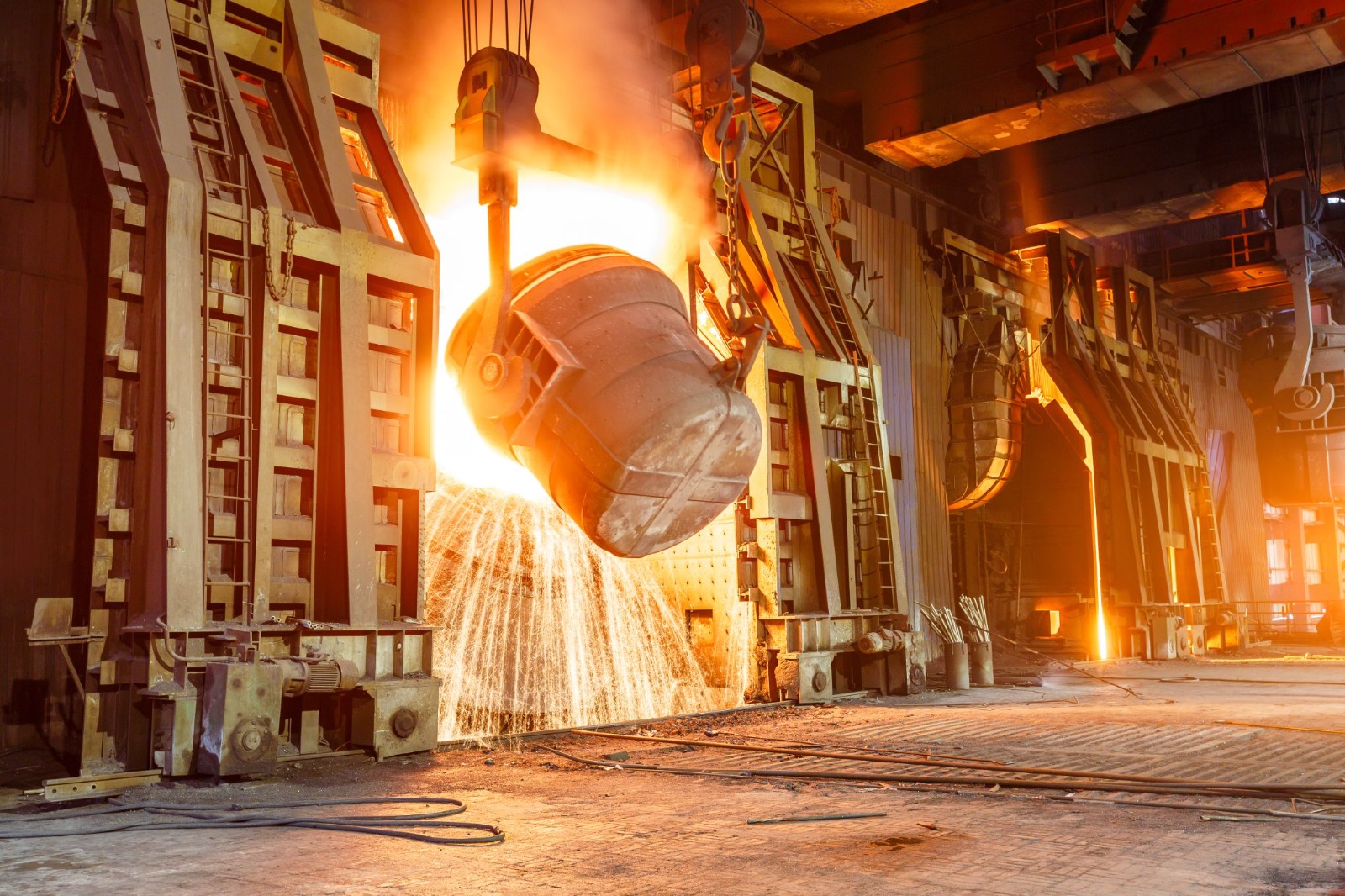
In the metallurgy industry, salt may not be a direct component of the alloy itself, but it is a critical auxiliary input that determines process efficiency, surface quality, and cost structure. In the processes where it is used, salt directly affects heat transfer, oxidation control, surface cleaning, and recycling efficiency. For this reason, salt in metallurgy should not be considered a simple auxiliary material, but rather one of the fundamental elements that define how the process operates.
The Role of Salt Baths in Heat Treatment Processes
One of the most common uses of salt in metallurgy is salt baths applied in heat treatment processes. The main purpose of this application is to ensure uniform heating of steel, reduce oxidation, and achieve controlled hardening. Thanks to salt baths, components absorb heat more evenly, and surface quality is preserved.
In these applications, salts such as sodium chloride (NaCl), potassium chloride (KCl), as well as sodium nitrate and nitrite, are used. The most important advantage of salt baths is their extremely rapid heat transfer. At the same time, oxidation on the component surface remains at a minimum level, and the risk of distortion is reduced. Due to these properties, salt bath heat treatment is widely preferred for tool steels, spring steels, and automotive components.
The Effect of Salt in Surface Cleaning and Oxide Removal Processes
In metallurgy, salt acts like a flux when in molten form. Thanks to this property, oxide layers formed on the metal surface are dissolved, and the metal surface is protected during melting. This improves casting quality and reduces surface defects that may occur during production.
This application is particularly prominent in aluminum casting, copper and brass alloys, and zinc-based metals. Thanks to the flux effect of salt, cleaner castings are obtained, slag formation is reduced, and the surface quality of the final product improves significantly.
Strategic Use of Salt in Aluminum Recycling
Salt consumption is very high in aluminum melting and recycling processes. The main function of salt in this area is to prevent metal oxidation, reduce aluminum loss, and stabilize the melting process. As a result, recovery efficiency increases, and the process becomes more controlled.
As stated in the document, the typical salt mixture used in aluminum recycling is clearly defined. This mixture generally consists of 60–70% sodium chloride (NaCl) and 30–40% potassium chloride (KCl). This application area stands out as a high-tonnage, low unit-margin but continuously demanded segment.
Salt as a Heat Transfer and Cooling Medium
Salt baths are also preferred as heat transfer and cooling media in metallurgical processes. Compared to oil, they offer greater stability, and compared to water, they provide a more controlled environment. This helps reduce the risk of sudden cracking.
Especially in hardening, annealing, and tempering processes, salt baths provide a controlled and reliable environment. As a result, the structural integrity of the metal is preserved, and unwanted deformations are prevented.
Use of Salt in Electrometallurgy and Melting Processes
In metallurgy, salt also plays an important role in electrometallurgy and certain melting processes. Molten salts provide a conductive environment that facilitates the transport of metal ions. This property makes salt indispensable in the production of certain metals and in specialized processes.
According to the document, these application areas include magnesium production, sodium metal production, and laboratory-scale or specialized processes for rare metals. In these applications, salt creates the environment that directly enables the process to function.
Technical Properties of Salt Used in Metallurgy
Salt used in the metallurgy industry must meet specific quality criteria. A purity level of 99% or higher is expected. Moisture content must be very low, and iodine must be completely absent. The grain size of the salt should be homogeneous, and heavy metal content must be kept to a minimum.
When these requirements are not met, production defects occur directly. As clearly stated in the document, using low-quality salt in metallurgical processes directly results in production failures.
Conclusion: Salt Is an Integral Part of Metallurgical Processes
In the metallurgy industry, salt should be considered not as an additive but as part of the process itself. In areas such as heat treatment, aluminum recycling, casting, and surface cleaning, the role of salt directly determines production quality and efficiency. The purity, moisture level, and homogeneity of the salt used are critical for the healthy progression of metallurgical processes. Incorrect or low-quality salt usage leads to production errors that are difficult to compensate for.
FAQ: Frequently Asked Questions About Metallurgical Salts
Why is salt important in metallurgy even though it does not directly enter the alloy?
Because salt is a critical input that determines process efficiency, surface quality, and production costs.
What are the advantages of salt baths in heat treatment?
They provide rapid heat transfer, reduce oxidation, and minimize component distortion.
Why is salt used in aluminum recycling?
To prevent metal oxidation, reduce aluminum loss, and stabilize the melting process.
Why is salt purity important in metallurgy?
Low purity and high moisture content directly lead to production defects and process inefficiency.
Why is iodized salt not used in metallurgical processes?
According to the document, iodine must be completely absent because it negatively affects the process.
Choosing the Right Salt for Your Metallurgical Processes
In the metallurgy industry, process efficiency and surface quality are directly linked to selecting the right salt. To explore salt solutions tailored to your production needs, visit the Marmara Tuz website.
Contact:
Website: https://marmaratuz.com/en


